Creating an engaging and effective learning environment for second graders is essential to nurturing their academic and social growth. Interactive and imaginative lesson plans help make school a place where children are excited to learn and eager to participate. Making use of creative activities and tools like 2nd grade writing worksheets can transform routine lessons into meaningful learning experiences that stick with students long after the lesson ends.
Encouraging students through active participation elevates their engagement, making complex concepts more accessible and enjoyable. When teachers incorporate a mix of hands-on projects, technology, and the arts, lessons become more memorable, while also supporting the development of critical thinking and social skills. These approaches motivate both academically strong students and those who might need extra support, offering everyone a pathway to success in the classroom.
Beyond engagement, creative lesson plans give students opportunities to work cooperatively, express themselves, and build confidence as learners. By blending diverse teaching strategies, educators can address a range of learning styles—visual, auditory, and kinesthetic—providing every second grader with a chance to shine. For broader strategies on effective elementary teaching, educators can review expert guidance from resources such as Edutopia’s tips on classroom participation.
Interactive Reading Activities
Engaging young readers requires imaginative approaches that bring stories and concepts to life. One popular technique is “Reader’s Theater,” where students take on roles from a script based on a familiar book or story. Acting out scenes not only helps children practice reading aloud with expression but also reinforces comprehension as they discuss characters, settings, and plot. Interactive read-alouds can also spark class discussions and encourage students to predict what might happen next, making reading a shared and enjoyable journey.
Other activities like partner reading and story sequencing using cards or pictures can also build foundational literacy skills in a fun, cooperative way. Teachers might invite students to illustrate scenes from a text, then retell the story using their drawings, promoting reading comprehension and creative expression at the same time.
Hands-On Math Lessons
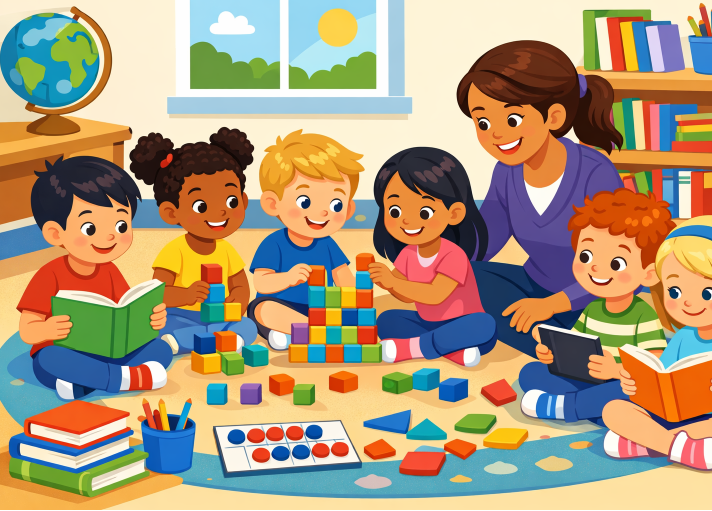
Mathematics becomes less intimidating and more tangible for second graders when lessons include games and manipulatives. Using objects like counting blocks, pattern tiles, or beads gives children a physical sense of numbers and operations. For example, students might use building blocks to visualize addition and subtraction, or measure classroom items as part of a lesson on measurement units.
Math games add excitement to otherwise routine topics. Board games, dice activities, or even digital math puzzles not only reinforce skills like counting, addition, and subtraction, but also help develop problem-solving and strategic thinking. Teachers can rotate game stations so students get hands-on practice with various concepts—all while having fun and staying active.
Science Experiments and Explorations
Curiosity comes alive during science time when students observe and experiment with the world around them. Simple experiments, such as planting seeds to track growth or mixing baking soda and vinegar to observe a reaction, provide hands-on learning and encourage students’ natural sense of wonder. These activities introduce the scientific method by prompting students to make predictions, record observations, and discuss results.
Classroom explorations might include nature walks to study plants and animals, or weather-related projects like making a simple rain gauge. Providing students with journals to sketch and document their scientific findings helps solidify learning and fosters observation skills.
Incorporating Technology in the Classroom
Modern classrooms benefit from an array of digital tools that can enhance traditional learning. Interactive whiteboards allow teachers to demonstrate concepts with visuals and animations, holding students’ attention and making lessons more accessible. Educational software and apps, such as adaptive reading platforms or interactive math games, enable personalized instruction that can adapt to each child’s skill level.
Students may also enjoy collaborating on digital storytelling projects or using tablets to research a class topic. Technology not only adds excitement, but also helps build digital literacy skills that will serve students throughout their education.
Creative Writing and Storytelling
Second graders thrive when they have spaces to express their own ideas through creative writing. Early exposure to storytelling and writing helps children develop communication skills and enhances imagination. Activities may include writing and illustrating their own storybooks, composing simple poems, or collaborating to create a class play. Sharing stories with classmates builds confidence and helps students learn from one another’s perspectives.
Giving prompts or story starters can fuel inspiration, guiding students who may not know where to begin. Encouraging peer feedback during group share sessions teaches respectful communication and cultivates a supportive classroom culture.
Art-Integrated Learning
Art can be woven into nearly every subject to help students make meaningful connections. When second graders are encouraged to draw, paint, or build models as part of science or social studies, abstract concepts become clearer and more memorable. For instance, illustrating the water cycle or crafting dioramas of historical communities brings learning to life and deepens understanding.
Integrating art also celebrates diverse talents and perspectives, and research shows that arts in education promote long-term retention and creativity. For teachers looking to explore the educational benefits of art, the Edutopia Arts Integration resource provides helpful guidance.
Physical Education and Movement-Based Learning
Active learning strategies that incorporate movement are crucial, especially for young children who need outlets for energy and focus. Teachers can build movement into lessons with activities like classroom scavenger hunts that reinforce math or vocabulary concepts, or by assigning group projects that involve building or assembling physical models. Games such as relay races with math problems or hopscotch spelling also make lessons lively while reinforcing content.
Outside the classroom, physical education fosters teamwork and physical health, while breaking up the school day with activity helps students return to academic work with renewed focus and enthusiasm.
Conclusion
Bringing interactive and creative ideas into second-grade classrooms makes learning an adventure for every child. By combining hands-on projects, technology, the arts, and movement, teachers can support every student’s growth, excitement, and curiosity. These approaches not only make school enjoyable but also lay a foundation for lifelong learning and success.

Denver aerospace engineer trekking in Kathmandu as a freelance science writer. Cass deciphers Mars-rover code, Himalayan spiritual art, and DIY hydroponics for tiny apartments. She brews kombucha at altitude to test flavor physics.
Leave a Reply